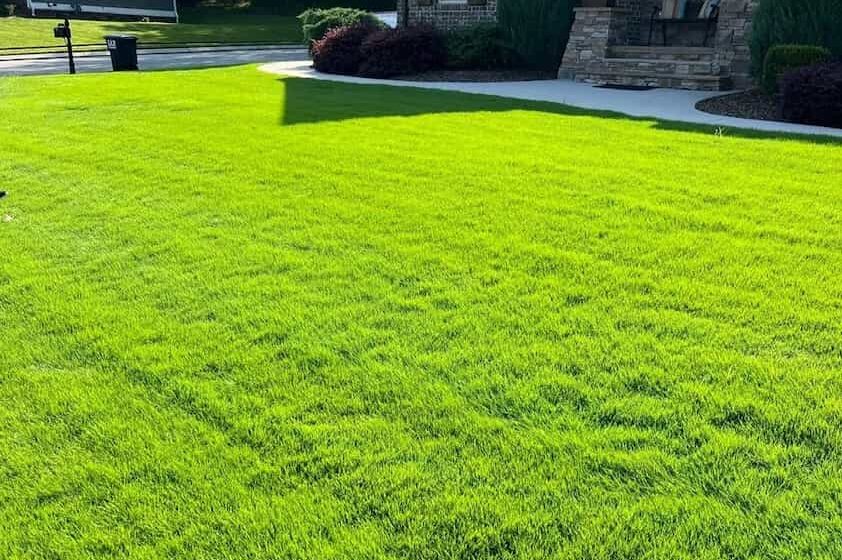


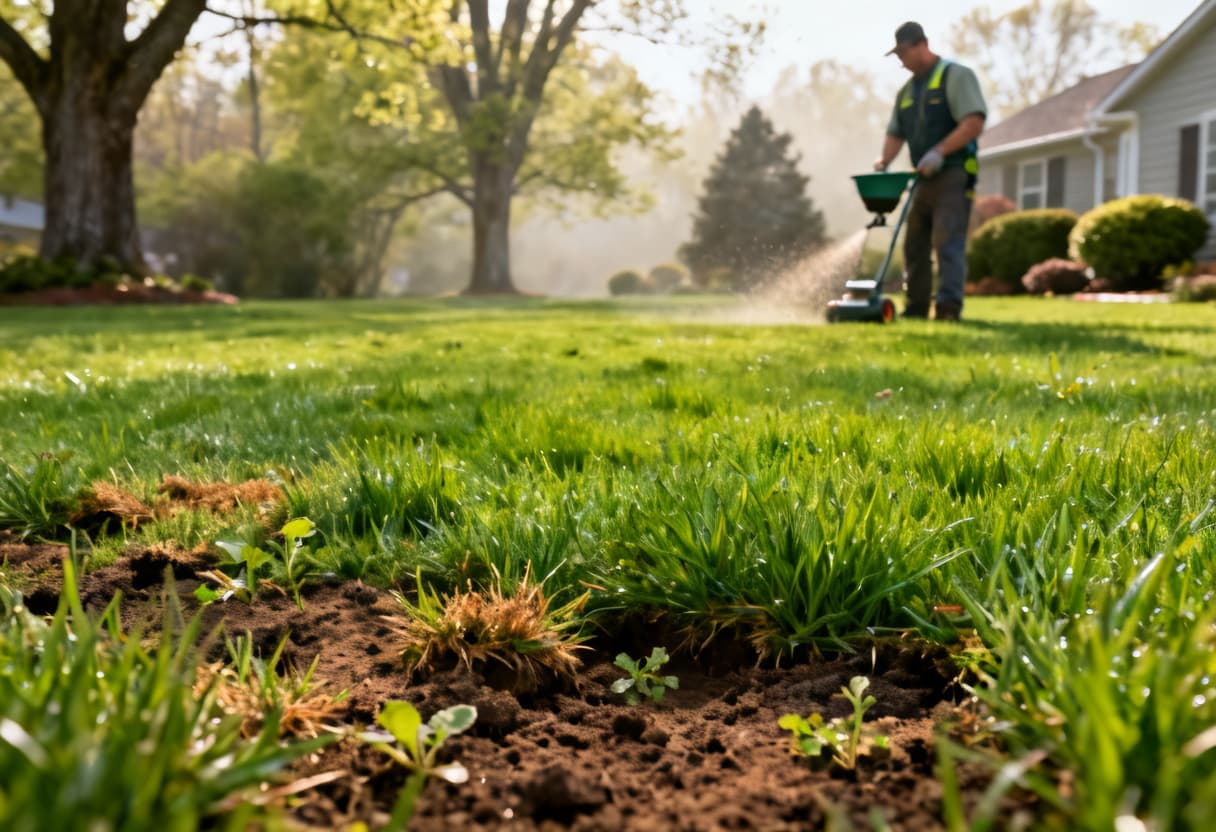
A healthy lawn in Tennessee takes more than occasional watering and weekend attention. Our changing climate, seasonal variations, and diverse soil conditions create unique challenges that require a long-term treatment strategy. Homeowners often deal with weeds, brown patch, thinning grass, grub damage, and soil issues that cannot be solved with surface-level care alone.
At TurfScapes of Tennessee, we focus on professional treatment programs designed to protect and strengthen existing lawns year-round. We are a chemical lawn care company, which means our work centers on fertilization, weed control, disease prevention, grub protection, mosquito control, tree and shrub care, and seasonal aeration and overseeding—not mowing, landscaping, or turf installation.
This lawn treatment guide for Tennessee will help you understand how Tennessee’s climate and soil affect your lawn, and how a proper treatment program creates stronger, greener, healthier turf year-round.
Understanding Tennessee’s Lawn Climate
Tennessee’s climate presents both opportunities and challenges for homeowners seeking a healthy lawn.
The state experiences hot, humid summers, mild to cool winters, and strong seasonal transitions that directly affect grass growth, weed pressure, and disease development. Depending on where you live, your lawn may face very different conditions.
East Tennessee often sees more elevation changes, cooler temperatures, and fescue-dominant lawns. Middle Tennessee experiences a mix of fescue and warm-season grasses with strong seasonal shifts. West Tennessee tends to have warmer temperatures and heavier clay soils, which can impact drainage.
Humidity is one of the biggest factors affecting lawn health across the state. Warm temperatures combined with moisture create ideal conditions for fungal diseases like brown patch, especially during late spring and summer.
This is why lawn treatment in Tennessee must be built around seasonal timing and prevention rather than reaction.
Common Soil Challenges in Tennessee
Healthy grass starts below the surface.
Tennessee soil varies greatly by region, but many homeowners deal with compacted clay, poor drainage, nutrient imbalances, and pH issues that make it difficult for grass to thrive.
Clay-heavy soil is common across much of Tennessee. While it can hold nutrients well, it also holds water too easily, which can lead to root stress, fungal disease, and shallow root development.
Compacted soil prevents oxygen, water, and nutrients from reaching the root zone. This causes weak growth, thinning turf, and increased vulnerability to weeds and pests.
Many lawns also struggle with nutrient deficiencies caused by inconsistent fertilization or improper product use. Applying the wrong treatments at the wrong time often creates more problems than it solves.
Professional lawn treatment programs address these problems through targeted fertilization, weed prevention, disease control, and seasonal aeration that improves long-term soil performance.
Why Fertilization Matters
Fertilization is the foundation of every strong lawn treatment plan.
Grass needs the right balance of nutrients to grow thick, resist weeds, recover from stress, and maintain strong color year-round. Without proper feeding, lawns become thin, weak, and vulnerable to disease.
Professional fertilization programs are designed around Tennessee’s growing cycles, not guesswork.
Spring applications help lawns recover from winter dormancy and prepare for strong seasonal growth. Summer treatments protect against stress and strengthen root systems during hot, humid conditions. Fall fertilization supports root development and prepares cool-season grasses, such as fescue, for winter survival and spring recovery.
Fertilization is not about making grass grow fast. It is about building stronger turf that stays healthy longer.
This is one of the biggest differences between DIY lawn care and professional lawn treatment services.
Weed Control Starts Before You See Weeds
Many homeowners wait until weeds appear before taking action. By then, the problem is already established.
Effective weed control in Tennessee requires both pre-emergent and post-emergent treatments.
Pre-emergent applications prevent weed seeds from germinating before they become visible. This is especially important for controlling crabgrass and other invasive seasonal weeds.
Post-emergent treatments target weeds that are already active and competing with healthy turf for nutrients and space.
A year-round weed control strategy helps prevent:
- Crabgrass
- Clover
- Dandelions
- Nutsedge
- Chickweed
- Broadleaf weeds
- Seasonal invasive grasses
Without consistent treatment, weeds quickly take over weak lawns and create long-term damage.
Professional weed control keeps lawns clean, healthy, and easier to maintain year-round.
Disease Control for Tennessee Lawns
Tennessee’s warm temperatures and heavy humidity create ideal conditions for lawn disease.
One of the most common issues homeowners face is brown patch, a fungal disease that spreads quickly during hot, humid months. It creates large brown areas in the lawn and can damage healthy turf if left untreated.
Other fungal diseases often appear when lawns are overwatered, underfed, or stressed by poor soil conditions.
Disease prevention is far more effective than disease recovery.
Professional treatment programs monitor seasonal risk factors and apply preventative treatments before widespread damage occurs. This protects root systems, improves turf strength, and reduces the cost of restoration later.
Disease control is not just about appearance. It protects the long-term health of the lawn itself.
Grub and Army Worm Prevention
Some of the most damaging lawn problems happen below the surface.
Grubs feed on root systems, weakening turf from the inside out and causing dead patches that often appear suddenly. Armyworms can rapidly destroy healthy grass, especially during active feeding seasons.
By the time visible damage appears, the lawn may already be under serious stress.
Preventative treatment is the most effective strategy.
Targeted grub and army worm prevention helps stop infestations before they damage root systems and require major recovery efforts. This protects both lawn appearance and long-term turf health.
Strong lawns start with strong root protection.
Fall Aeration and Overseeding
One of the most valuable services for Tennessee lawns occurs in the fall.
Aeration and overseeding are especially important for fescue lawns, with the prime treatment window typically falling between September and October.
Aeration relieves soil compaction by creating small openings that allow air, water, and nutrients to reach the roots more effectively.
Overseeding fills in thin or damaged areas with new grass growth, helping lawns recover density and improve overall strength.
Together, these services help:
- Improve root development
- Reduce soil compaction
- Increase turf thickness
- Strengthen drought resistance
- Improve spring lawn performance
This is not a year-round service. Fall timing matters.
When done correctly, aeration and overseeding create major long-term improvements that homeowners notice well into the next season.
Why Professional Treatment Programs Work Better
Many homeowners spend time and money trying to fix lawn issues one product at a time.
The problem is that lawn health is connected. Fertilization, weed control, disease prevention, pest management, and soil health all work together. Treating one issue without addressing the full system often leads to repeated frustration.
Professional annual treatment programs provide consistency, timing, and expertise.
Instead of reacting to problems, the focus shifts to prevention and long-term results.
At TurfScapes of Tennessee, we build programs tailored to your property’s specific needs, helping homeowners protect their investment with dependable treatment strategies that work year-round.
That is the difference between temporary fixes and true lawn health.
A Stronger Lawn Starts with the Right Plan
Tennessee lawns require more than surface-level care. Climate, soil conditions, weed pressure, and seasonal stress all play a role in how your lawn performs.
A healthy lawn comes from professional treatment programs built around prevention, timing, and long-term care.
Fertilization, weed control, disease prevention, grub protection, and fall aeration all work together to create stronger turf and better results year after year.
That is what professional lawn treatment should deliver.
If you are ready for healthier grass and fewer lawn problems, TurfScapes of Tennessee is here to help.
Get Your Free Lawn Evaluation Today
Let us build the right treatment program for your property.
From fertilization and weed control to disease prevention and seasonal care, we help Tennessee homeowners protect and strengthen their lawns year-round.
Call today for your free estimate.
📞 423-333-6015
🌐 turfscapesoftn.com
TurfScapes of Tennessee
More Than Lawn Care. More Than a Lawn.